2026-11-17 ·
Title 24 Cool Roof Requirements and Coastal Materials in Manhattan Beach
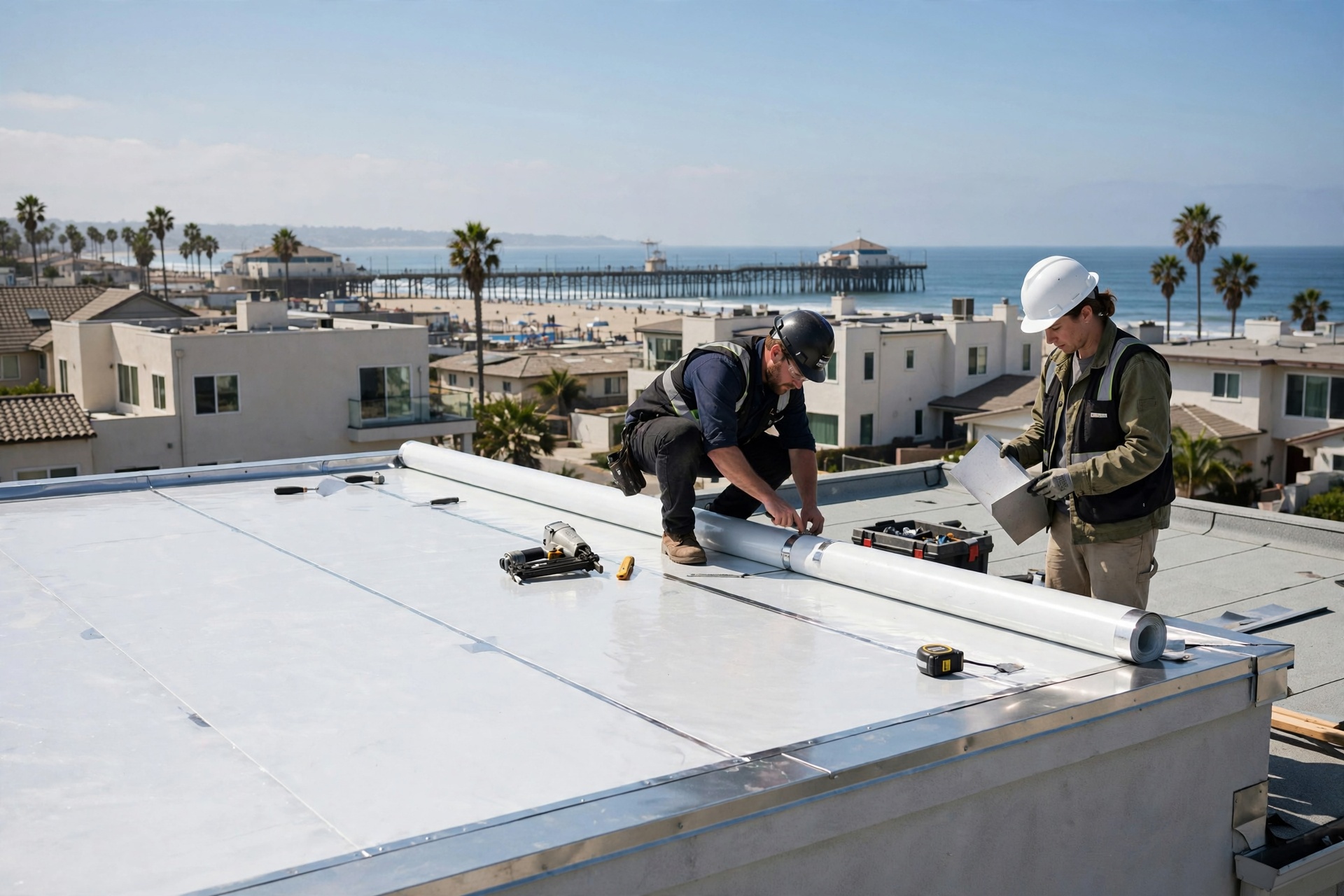
California Title 24 Part 6 building energy efficiency standards require steep-slope residential roof replacements in Climate Zone 6, which includes Manhattan Beach, to meet minimum solar reflectance and thermal emittance ratings or an equivalent Solar Reflectance Index of 16 to 20 depending on slope and material. For homes in coastal Los Angeles County, meeting these state mandates while preventing salt air corrosion requires choosing tested cool-rated clay tiles, Kynar 500 coated standing seam metal, or specialized modified bitumen membranes.
What Are California Title 24 Cool Roof Requirements in Manhattan Beach?
Under California Building Energy Efficiency Standards (Title 24, Part 6), residential reroofs in Manhattan Beach where more than 50 percent of the roof or 2,000 square feet is altered must meet cool roof standards in Climate Zone 6. For roofs with pitches greater than 2:12, the material must achieve an aged solar reflectance of at least 0.20 and a thermal emittance of 0.75, or a minimum Solar Reflectance Index (SRI) of 16. Flat roof sections with pitches of 2:12 or less require an aged reflectance of 0.63 and thermal emittance of 0.75, or an SRI of 75. Property owners filing permits with the City of Manhattan Beach Community Development Department must submit CF2R compliance forms before final building inspection sign-off.
How Much Does Title 24 Compliant Reroofing Cost in Manhattan Beach?
A complete Title 24 compliant roof replacement in Manhattan Beach typically costs between $14,000 and $38,000 depending on home square footage, pitch, and selected material profile. Standard cool-rated architectural composition shingles range from $5.50 to $8.50 per square foot installed. Concrete and clay cool tiles range from $11.00 to $19.00 per square foot, while coastal-grade standing seam metal with factory cool pigment finishes ranges from $14.00 to $24.00 per square foot. Flat roof silicone or thermoplastic cool roof membranes typically run between $7.50 and $12.50 per square foot. Transparent written evaluations from roof replacement specialists ensure all compliance documentation and City of Manhattan Beach permit costs are fully itemized prior to installation.
Which Roofing Materials Best Resist Coastal Salt Corrosion in the South Bay?
Grade 316 stainless steel fasteners, copper valleys, and clay tiles offer the highest resistance to marine layer salt fog within two miles of the Pacific Ocean. Standard galvanized steel flashing degrades within 5 to 8 years along The Strand and Manhattan Beach Boulevard due to continuous airborne sodium chloride particles. Concrete tiles and high-performance clay tiles naturally satisfy Title 24 thermal requirements while resisting wind-driven salt spray. Homeowners in The Strand and the Tree Section opting for modern metal roofing should specify marine-grade aluminum or Kynar 500 polyvinylidene fluoride (PVDF) coated metal to prevent coastal oxidation. For flat roof modern architecture common along Ocean Drive, multi-ply SBS modified bitumen with a bright white granule surface delivers dual UV reflection and waterproofing protection.
Can Existing Tile Roofs Be Repaired Without Replacing the Entire System?
Yes, isolated tile cracks, broken mortar caps, and worn valley flashings can be systematically restored through targeted tile roof repair without triggering full Title 24 reroofing mandates. California energy code triggers only apply when reroofing projects alter more than 50 percent of the existing roof area. If winter ocean storms cause localized tile slippage or single-slope wind displacement, licensed contractors can perform a lift-and-reset procedure, replacing deteriorated 30-pound asphalt underlayment with high-temperature synthetic underlayment while preserving the original historical roof tiles. Homeowners can review indicators of concealed moisture intrusion in how to spot early signs of roof leaks in Manhattan Beach homes before structural rot develops.
When Should Manhattan Beach Property Owners Schedule Roof Inspections?
South Bay homeowners should schedule professional roof inspections biannually, specifically in October before Pacific winter storms begin and in April after the rainy season concludes. Coastal marine moisture and morning fog deposit salt crystals that dry and crystallize under afternoon sun, expanding micro-cracks in tile glaze and sealant joints around skylights. Early evaluations identify oxidized flashing, shifted ridge caps, and clogged drainage scuppers before interior drywall damage occurs, protecting structural roof decking across all coastal neighborhoods.